04 Collection System and Facilities
4.1 Collection System and Facilities
The BC Recycling Regulation requires producers, or an agency acting on their behalf, to “provide for reasonable and free consumer access to collection facilities or collection services” throughout British Columbia. Considering the characteristics of ready-to-drink beverages—including high purchase frequency, short consumption time, wide distribution across the province, and container size and type—Encorp identified early in program development that a network of dedicated return locations would be the most effective method for collecting containers at end of life.
Over the past 30 years, Encorp has developed and maintained an extensive network of dedicated return locations through the Return-It program, enabling consumers across the province to conveniently return beverage containers and redeem deposit refunds. Beyond simply meeting regulatory requirements, Encorp continually works to meet and exceed consumer expectations for accessibility, convenience and ease of use.
To maximize public participation and achieve strong environmental outcomes in an effective and efficient manner, Encorp has established a comprehensive suite of collection systems and facilities.
| Total 2025 = 188 | Total 2024 = 183 |
Return-It Depot
| 2025 | 2024 | |
|---|---|---|
| Independent | 162 | 163 |
| Corporate | 4 | 2 |
Return-It depots are the most common collection locations in the province and represent the traditional model of beverage container return through dedicated bricks-and-mortar facilities.
The majority of depots are independently owned and operate under license agreement with Encorp to collect used beverage containers in the Return-It program. In addition to beverage containers, many depots also participate in other extended producer responsibility (EPR) programs, accepting additional recyclable materials under separate agreements not associated with Encorp.
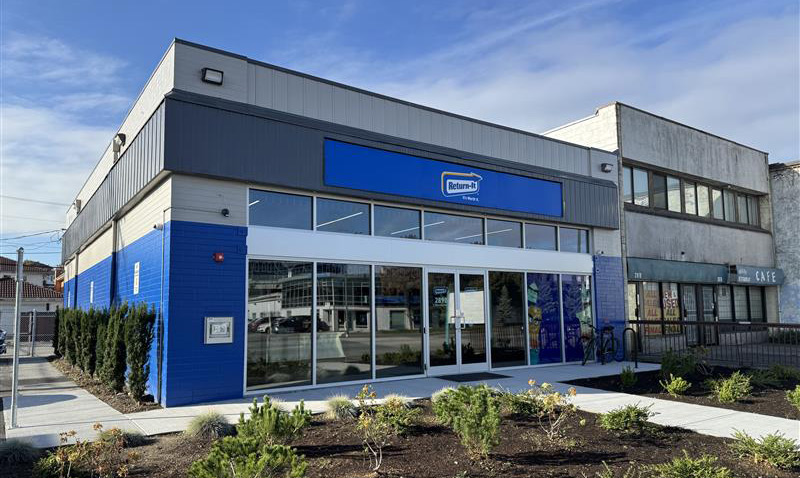
Recognizing that convenience and proximity are key drivers of consumer behaviour, Encorp has also taken an active role in addressing gaps within the collection network by establishing corporately owned and operated bricks-and-mortar locations. These sites prioritize the Return-It Express program, allowing consumers to use the bag drop system that enhances speed and ease of use, as well as the installation of consumer-friendly technology to efficiently count and sort used beverage containers.
This approach also enables the use of smaller-footprint facilities in dense urban areas—such as downtown Vancouver—where space constraints make traditional depot models less feasible.
New locations in 2025: Vancouver and Langley
Return-It Express & GO Stations
| 2025 = 22 | 2024 = 18 |
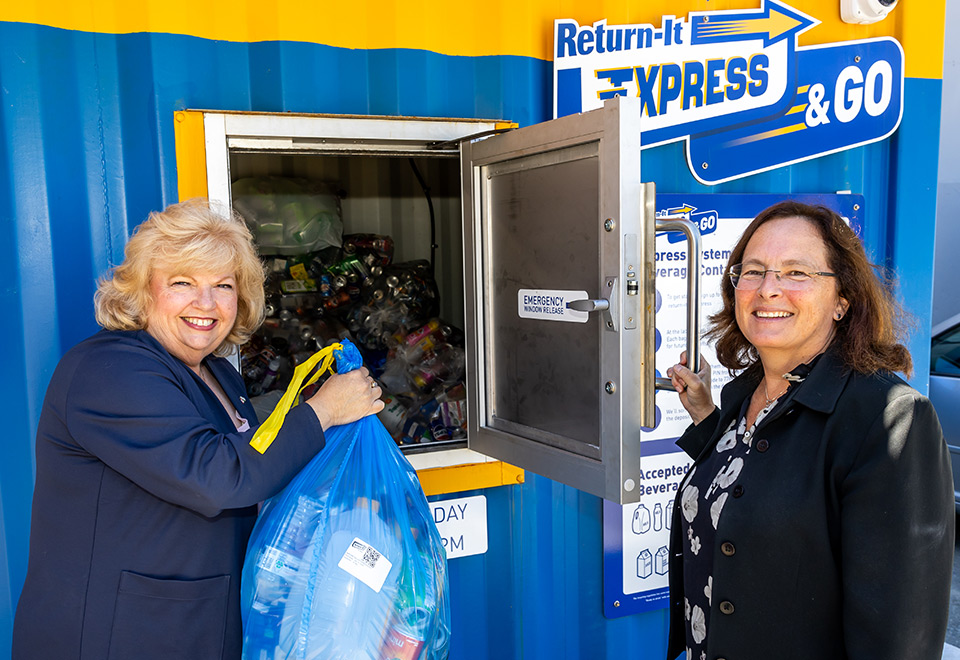
Express & GO stations are an innovative solution designed to further enhance consumer accessibility to the Return-It Express program. Constructed using repurposed shipping containers, these self-serve stations accept beverage containers through the Express bag drop system.
These stations offer numerous benefits for consumers, including extended operating hours that allow for drop-off at a time that suits their schedule. Security is also a key feature: stations are accessible only to registered users via a one-time PIN code and are monitored 24/7 through cameras and alarm system.
One of the primary advantages of utilizing repurposed shipping containers is their ease and flexibility of deployment. With the ultimate goal of increasing accessibility and diverting more beverage containers for recycling, Express & GO stations have proven to be an ideal solution, both in highly dense urban areas—where their small footprint can be seamlessly integrated into locations such as a grocery store parking lots—and in rural communities where establishing a traditional depot may not be practical.
By addressing two distinct accessibility challenges, Express & GO stations provide a practical, scalable solution that ensures beverage container recycling remains easy, secure and convenient for all BC residents.
New locations in 2025: Surrey (x2), Vancouver and Mission
Other Collection Channels
Return-to-Retail
| 2025 = 417 | 2024 = 419 |
Under the Recycling Regulation, retailers that sell ready-to-drink beverage containers are required to accept back the containers they sell and return deposits to consumers. While return-to-retail improves accessibility and convenience for consumers, beverage container collection is not the core business of retailers. To help retailers meet their regulatory obligations, Encorp works closely with many large grocery chains—both directly and through the Retail Council of Canada—to coordinate timely pickup and transportation of collected containers.
Recycle BC Curbside Recycling
In British Columbia, the curbside recycling program for the Packaging and Paper Product Category (Schedule 5) is managed by Recycle BC. For a variety of reasons, some consumers choose to place refundable beverage containers in their curbside recycling, forgoing their deposit refund. Although these containers are not directly collected or processed by Encorp, the volumes captured are included as part of the province’s overall recovery rate for used beverage containers.
To ensure accuracy and transparency, Encorp collaborates closely with Recycle BC to implement a stringent sampling and auditing process. This process calculates the volume of refundable beverage containers recovered through the curbside stream and ensures they are appropriately accounted for in Encorp’s overall recovery rate.
This collaboration reflects the strength of British Columbia’s extended producer responsibility framework, where stewardship agencies work together to maximize material recovery, maintain system integrity, ensures cost efficiencies for consumers and supports continuous improvement across collection channels.
Industrial, Commercial & Institutional (IC&I) Sector
Non-residential facilities—including offices, stadiums, schools, healthcare facilities and other institutional buildings—fall within the Industrial, Commercial & Institutional (IC&I) sector. These locations typically contract privately with commercial waste management service providers to manage multiple waste streams, including garbage, organics and mixed recycling.
As with the curbside program managed by Recycle BC, Encorp has implemented robust sampling and audit processes to account for refundable beverage containers recovered through the IC&I sector. Although these containers are not returned through traditional deposit-refund channels, the volumes captured are included in the province’s overall recovery rate for used beverage containers, helping maintain visibility into overall material recovery.
Outdoor Spaces and IC&I Bins
Since 2008, Encorp has provided dedicated bins for refundable beverage containers to municipalities, BC Parks and IC&I venues across British Columbia. These bins are strategically placed alongside garbage receptacles in outdoor and high-traffic areas to encourage proper diversion of beverage containers from the waste stream.
While the bins are not serviced directly by Encorp, they are intentionally left unlocked to enable municipalities, community groups or individuals to access the collected containers and return them to an authorized return location to redeem the deposit refund.
This approach supports increased diversion, reduces litter and promotes consumer participation, while enhancing recovery opportunities outside of traditional return channels.
Highlights from 2025
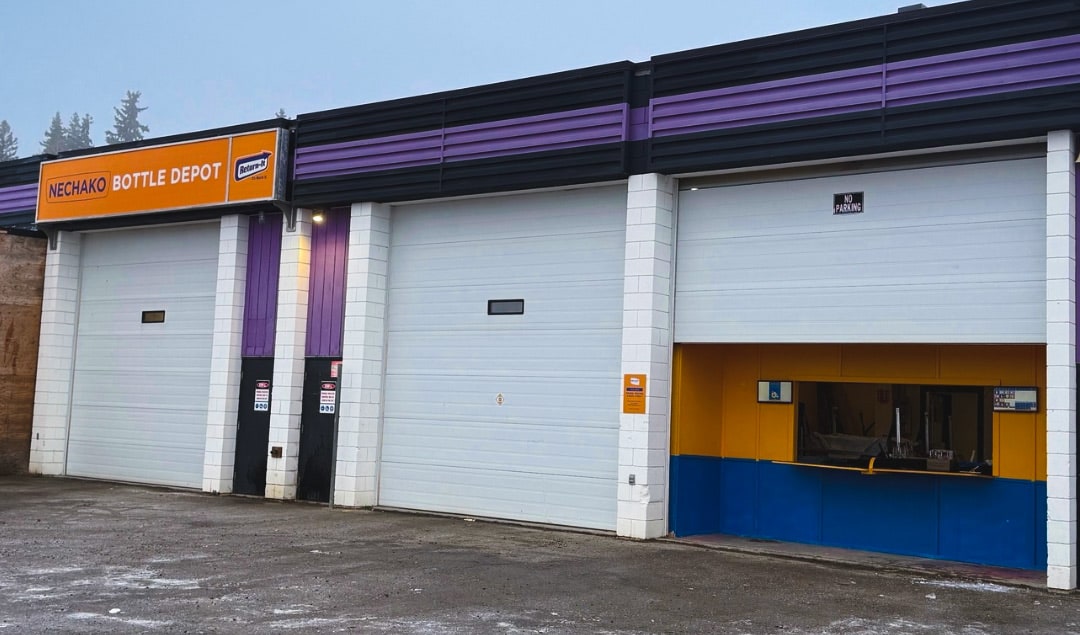
Nechako Bottle Depot Destroyed by Fire
On September 28, 2025, a structure fire destroyed the Nechako Bottle Depot in Prince George. Thankfully, no one was injured; however, the building was completely lost.
For the depot owners and team, the loss was both devastating and deeply challenging. In the face of significant disruption, their response was defined by resilience and determination. Almost immediately, efforts were underway to identify alternative locations, develop operational plans and mobilize the resources required to restore service to the community.
Through hard work, collaboration and a strong commitment to maintaining collection services for their customers, the Nechako team successfully established a temporary replacement site within just 60 days of the fire. Their swift action ensured continued service for residents and demonstrated dedication of local operators to serving their community.
New Grandview Location Fills a Gap
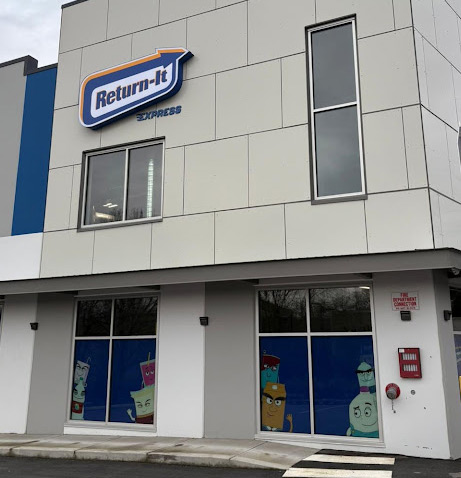
A new Return-It location opened in East Vancouver on Grandview Highway in late October, helping restore recycling access for residents who lost their local depot in 2021. The full-service, technology-enabled redemption center was designed with customer experience in mind.
Unlike traditional depots, the facility does not require manual sorting. Beverage containers can be returned through Return-It’s Express bag drop service or for cash through reverse vending machines (RVMs), making the process faster and more convenient.
This new location is helping redefine the beverage container recycling experience by focusing on modernization, convenience and improving recovery rates.
Langley Express Expansion
As more consumers learn about and experience the ease and convenience of the Return-It Express program, Encorp continues to look for opportunities to expand the popular service. A new Return-It Express location opened in a growing area of Langley in December 2025. The Langley site operates from a small-footprint commercial building and accepts beverage containers through the Return-It Express bag drop program.
4.2 How the Collection System Works
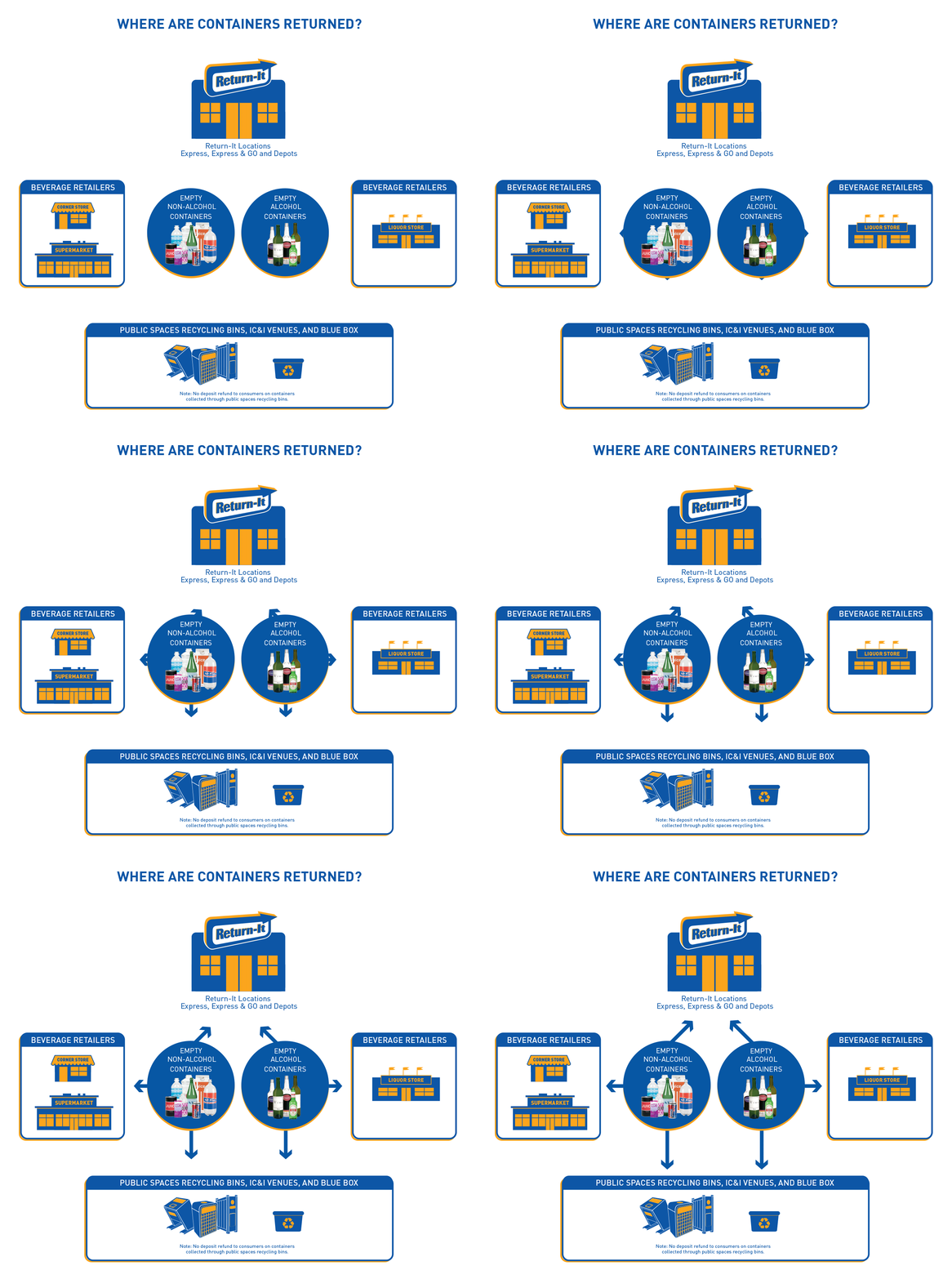
Encorp’s collection system is composed of a variety of convenient options for consumers to return their used beverage containers for a deposit refund and to ensure they are recycled.
4.3 Collection, Transportation and Processing Map
Since the program’s inception, Encorp has utilized a network of collection sites, transporters and consolidation facilities to manage used beverage containers across the province. Consumers typically return their containers to a Return-It depot to obtain their deposit refund. At these locations, containers are counted, sorted by material type and prepared for transportation.
Transportation providers then move the containers to consolidation facilities, where they undergo additional processing, including baling and preparation for shipment to end-market recyclers.
Encorp remains committed to continuously optimizing its collection and consolidation network to improve operational efficiency while reducing both program cost and environmental impacts.
The map outlines the network of dedicated collection sites, transportation routes and consolidation or processing locations across BC.
 | Return-It Corporate Depot |
 | Return-It Express & GO |
 | Independent Return-It Licensed Depot |
 | Processing Plant |
 | Consolidation Site |
Note: Map outlines collection, transportation and processing for all commodities except glass.
For detailed location search, please visit return-it.ca/locations.
4.4 GIS Mapping and Accessibility Analysis
Since commencing operations in 1994, Encorp has established a comprehensive network of permanent collection locations where the public can conveniently return beverage containers covered within Encorp’s plan.
Encorp has engaged a third-party consultant, Licker Geospatial, to conduct a complete benchmark geographic information system (GIS) mapping analysis to ensure reasonable access as outlined in the Recycling Regulation. The criterion started with the premise of serving more than 97% of the province’s population. Encorp exceeds the 97% accessibility target.
Encorp has adopted a minimum criterion for rural coverage, requiring a catchment population of 3,000 within a 45-minute driving radius. This criterion is notably more stringent than the industry standard, which typically requires a population of over 4,000. In urban areas (defined as census metropolitan areas by Statistics Canada), the program has set a 30-minute driving radius as its standard. However, most Encorp locations are within a 15-minute driving radius, with the exception of the City of Vancouver, where siting new locations has been particularly challenging. Licker Geospatial has completed accessibility analyses for all Return-It facility locations using the 2021 population at the dissemination block level and three different accessibility standards:
1. 4,000 Population Threshold
Defines urban accessibility as a facility within a 30-minute driving radius. For rural coverage (outside a census metropolitan area), assessed for communities where the census subdivision’s total population was equal to or exceeded 4,000, access is defined as passing the standard if it is within a 45-minute driving radius.
2. 3,000 Population Threshold
Identical to the 4,000 Population Threshold, with the exception of rural coverage (outside a census metropolitan area) being assessed for communities where the census subdivision’s total population was equal to or exceeded 3,000.
3. Revised Standard
Defines urban accessibility as a facility within a 15-kilometre radius. Rural accessibility is defined as within 60 kilometres when the community is within 200 kilometres of a census metropolitan area (CMA).
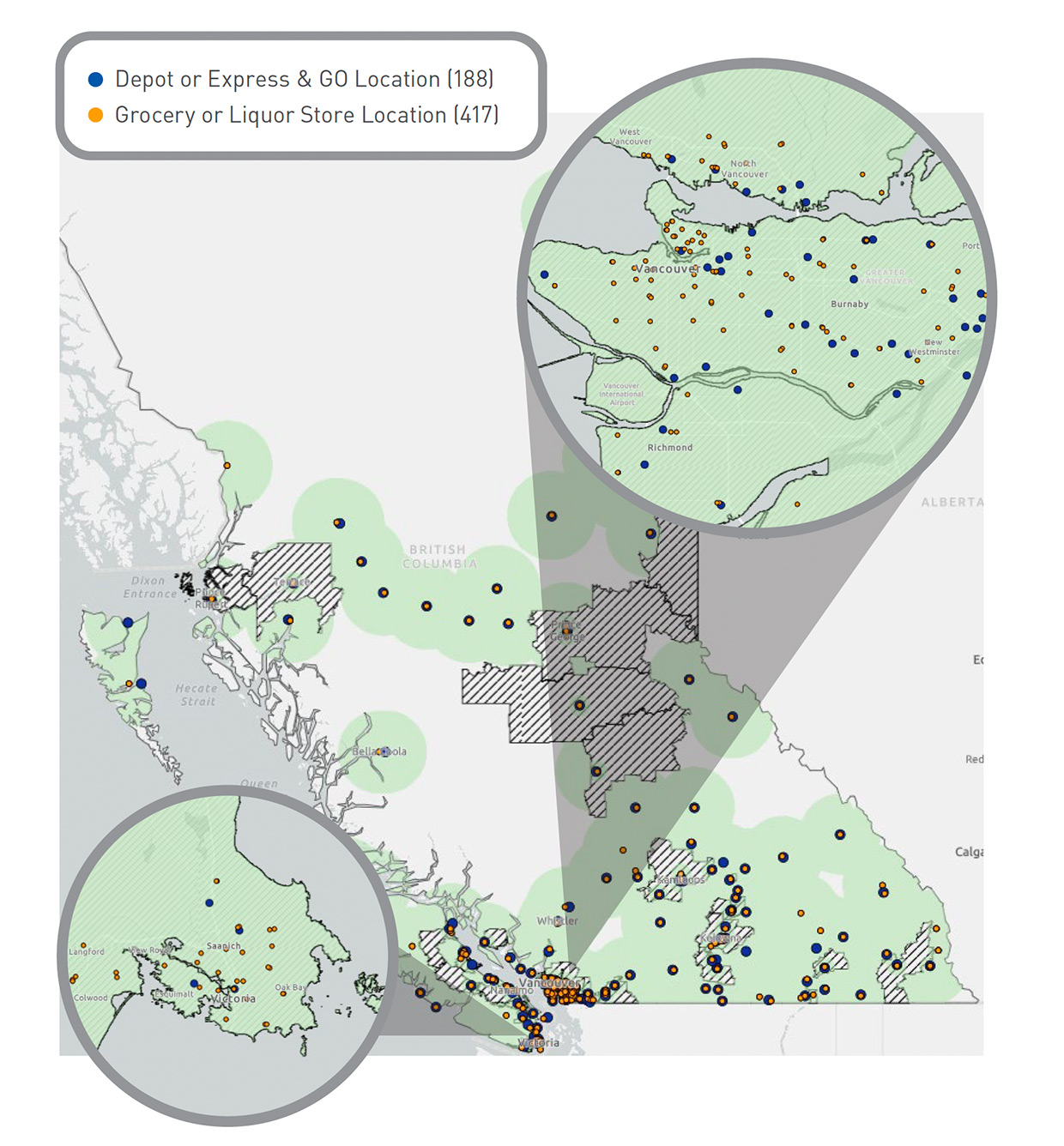
Using specialized Esri ArcGIS Pro processes, drive times and planar distances were calculated from each dissemination block’s centroid to the nearest facility in order to assess whether the resident population had sufficient access under the three standards. Access to 2025 facilities was assessed on the respective years’ road network, although only 2021 population numbers were used, as census data is only available in five-year intervals and 2021 was thus the most accurate data available. The graphic below shows the percentage of the population found to have access to a return location under the previously described standards in 2025 provincially.
Given the goal of 97% of the province’s population (within the standard’s evaluation parameters of rural coverage) having access to a Return-It facility, all three standards meet this target.